
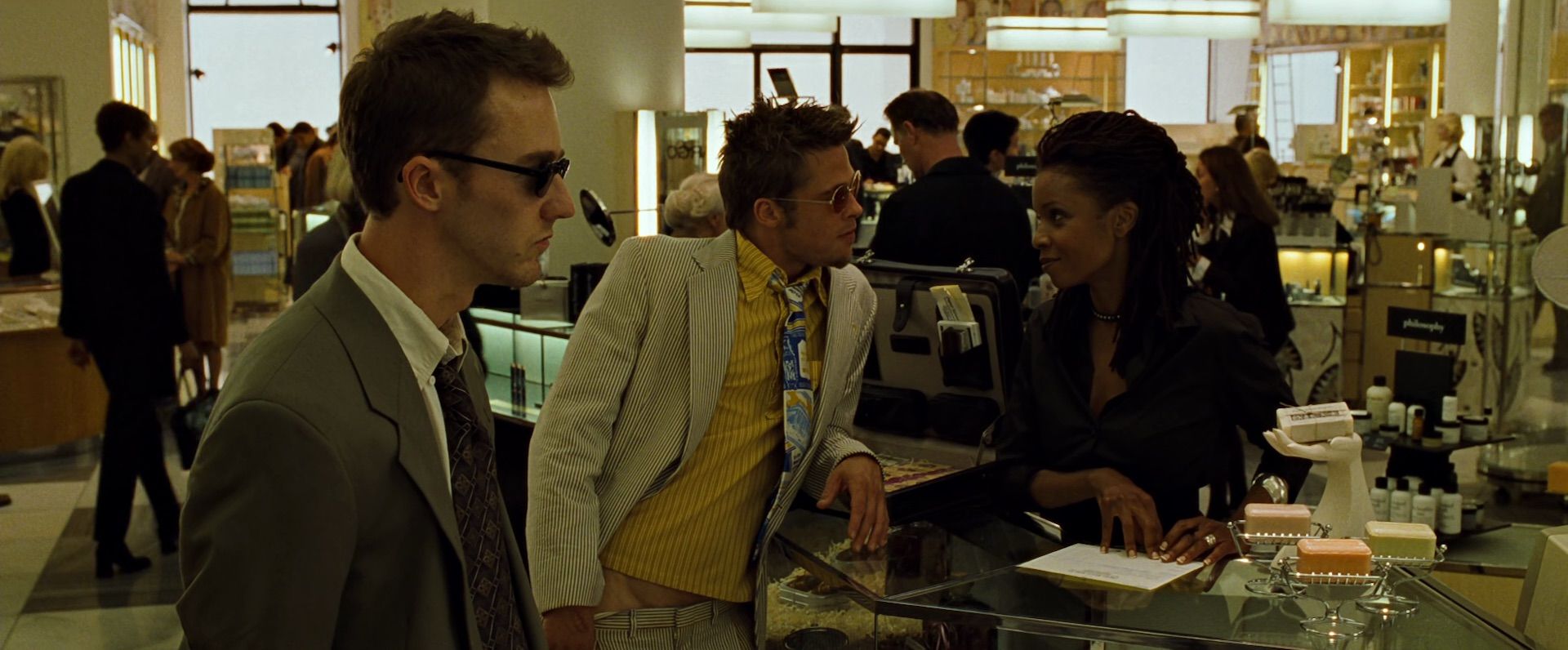
originally posted to Tumblr (with some regrettable AI slop)
Note: Spoilers for Fight Club.
If you like anti-heroes, or even villains, to the point that you argue online or at parties that they’re “Correct, actually, and you should rewatch the film or reread the book with that in mind,” there’s something you need to hear and to carefully consider:
Sometimes people lie.
I know that seems like a given, and probably so obvious that it doesn’t need to be mentioned. But it does need to be mentioned, and apparently constantly pointed out, because I still see some laughably dangerous takes about popular films that gain shocking levels of validation. So without further adieu, let’s talk about how
Tyler Durden is a Liar.
Not always, but sometimes, and often enough that we shouldn’t ever take his word at face value.
Like so many things in life, “being a liar” isn’t a binary. But with trust, like with personal safety, if you’ve seen a pattern of dishonesty or danger, you should assume the worst are until they’ve been proven otherwise.
Check out the above linked Tweet thread (note: no longer available) and you’ll see someone paraphrasing the motivations of Fight Club’s antagonist, as literally spoken by the character himself. Yes: Tyler Durden wants Jack (Ed Norton’s unnamed character is called “Jack” in the credits) to leave his consumerist life and lead a cult of obedient followers. Is it because he wants to help his fellow man embrace a life free of consumerism?
NO! It’s because he’s a product of Jack’s untreated mental illness. And without the illness, Tyler ceases to exist.
Most of Tyler’s advice is to help Jack reach “rock bottom”. Many 12-step programs insist you need to hit “rock bottom”, or the lowest place in your life, before you can “clear out enough junk for the good to have a chance.” In other words:
It’s only after we’ve lost everything that we’re free to do anything.
– Tyler Durden, Fight Club
But this isn’t helpful psychiatric advice. Clinical psychiatrists argue that “rock bottom” is a form of “resource loss”, which leads to further psychological stress, not less.
Tyler never states it, but he hates mental healthcare. He’s manipulating people into sacrificing their lives for a cult and using all the charismatic propaganda of every cult leader who’s ever bought a rural townhouse and bulk white robes.
Yes, we see Jack get plenty of therapeutic emotional output during the first act. And yes, that emotional output is what leads to Tyler. But that’s all it is: emotional output. It’s crying while pretending to be something he’s not, which turns into crying while getting his eye knocked out of its socket. It’s not asking help from a licensed medical professional.
Even the male doctor he sees, who Jack hopes will prescribe him medication, recommends herbal remedies instead of seeking psychological help.
Tyler needs Jack to stay mentally ill to survive. Looking through that lens, all of his rhetoric makes a lot more sense. Yes, some of it sounds like good advice, and some of it genuinely is.
But we can’t look at pieces of Tyler Durden and decide who he is; we have to take him in totality. And when some of his rhetoric leads to cohorts getting their scalp blown apart, or giant buildings collapsing and potentially killing people (Yeah, he says the buildings were “all our people” and evacuated, but again: why trust him?) then we have to question the other things he says, too.
#fight club #tyler durden #rock bottom #consumerism #pop culture #mini essay #essay #villains #anti hero #mental illness #mental health
What do you think?