
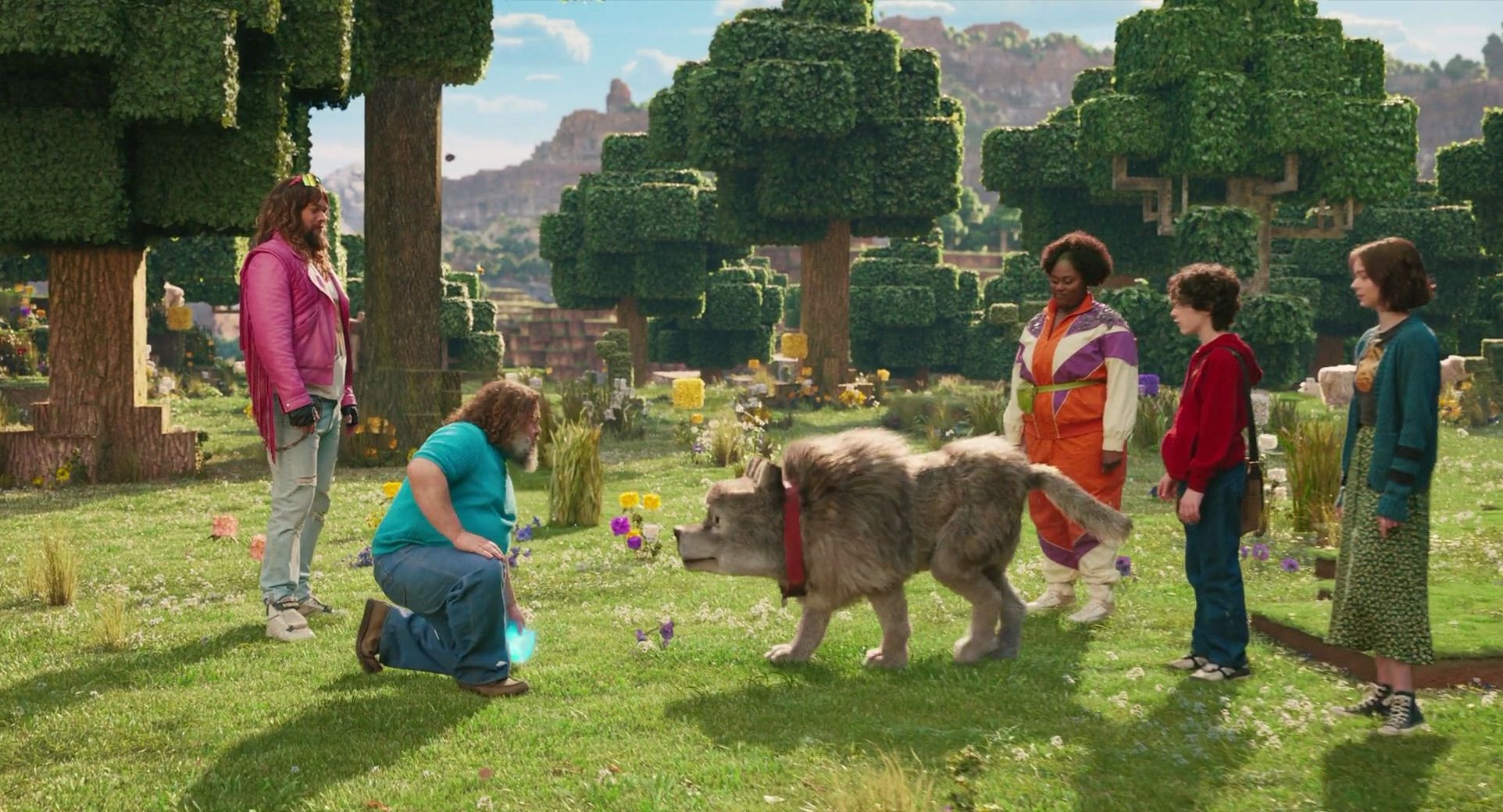
It’s been over a year since Warner Bros released A Minecraft Movie to eager theater-goers. Remember “chicken jockey”?
… Remember?
Yeah…
Anyway, I wanted to write something about it closer to release, as I had some criticism that I hadn’t seen published anywhere else. On the one hand, I have a lot of positive things to say. On the other, I agree with some “cons” while having my own which weren’t discussed.
Overall, I think A Minecraft Movie (2025) is a surprisingly honest, heartfelt portrayal of its source material, but because of a couple basic assumptions it makes for the audience, should serve more as a warning for this generation than an easily digested popcorn flick.
There’s a lot in that vein, so let’s crack it open.
The Good
Defending A Minecraft Movie is a double-edged sword: on the one hand, it was dismissed by film snobs pre-release simply for being a licensed product based on a multi-billion dollar franchise. I can’t blame them, either: if the selling point of a piece of art is the brand (not the artists or artistry behind it), then there’s not a financial incentive to invest time and money into making a deep, emotional, or memorable experience. Sure, we get the occasional Barbie (2023), but that enthusiasm deflates when that same studio shelves completed films for tax write-offs ().
On the other hand, it has a defense team beyond comprehension; it’s built-in audience of energetic, loud defenders turned passion into chaos for theater staff. A year later and the film grossed nearly a billion USDs – over six times its budget – and maintains a Rotten Tomatoes audience score of 84%. This film doesn’t care about snobs, nor does it need snobs to care about it.
This film doesn’t care about me, nor does it need me. But I do think it wants its audience to care about it. And, even more than that, I think it cares about its audience.
“A,” Not “The”
I never played Minecraft before having a child who would start each school year fitted with a brand new creeper sweatshirt, sized up from the last one. Even before playing, they’d already watched short films with recurring characters interacting, antagonizing, and cooperating within the game, using professionally edited screen recordings as the cinematic lens of choice. I know calling YouTube clips of a boy and his turtle shell-wearing friend a “short film” sounds dramatic, but if you’ve never seen the storytelling craft of “IF YOU CHOOSE THE WRONG STAIR, YOU DIE!”, it is cinema vérité for gen alpha, containing the same three act structure as Star Wars. (No, I’m not joking, and yes, I had to make that as pretentious as possible; no further questions.)
Point is, Minecraft is less a game than a medium. That’s why millions of stories have been told, whether you look at the late, great Telltale Games’ Minecraft: Story Mode (which even made it to Netflix, before they dropped all interactive media a couple years back (), fan media like the aforementioned Maizen video, or the seemingly countless graphic novels and middle-grade fiction series. To play Minecraft is to acknowledge that you are part of a greater storytelling tradition than what events happen on your screen.
Calling any film The Minecraft Movie would promote it as more important, canonically, than all other media. This is part of the reason I didn’t particularly love The Super Mario Bros. Movie, a franchise whose video game counterparts can be viewed as a new production by a roaming theatre troupe (at least, according to series creator Shigeru Miyamoto.[]) Instead of embracing this perspective, Illumination opted for a more battle-tested, safer Isekai story where the familiar urban New York setting gently guides viewers towards the strange, magical world of the Mushroom Kingdom. Imagine if Illumination trusted the audience enough to skip the explanations and open the film with Mario throwing fireballs at Donkey Kong. Or, instead of trying to save the world so he can get back home, went on a heist against Bowser’s castle? Or what if it put Toad in the lead role? The point is that The Super Mario Bros. Movie views itself as the cinematic translation of its source material, which is bizarre when we’re talking about a game whose first game’s only narrative line is, “Thank you Mario! But our princess is in another castle!”
Instead, this is A Minecraft Movie, implying it is simply one story among others, which could lead to drastically different executions from different artists with varying backgrounds. After all, a film is built from smaller pieces of creative work from multiple people, whether it’s the set designers, costumiers, Foley artists, or countless other crafts and demonstrations of artistic input. In this sense, a film suits the mentality of Minecraft as a cooperative game about exploring and creating.
“…then we craft.”
Director Jared Hess is best known for irreverent, (mostly) family-friendly comedies with quirky characters, such as Napoleon Dynamite and Nacho Libre. This is his first time directing without his writing partner and wife Jerusha Hess, instead relying on a script from long-time collaborators Chris Bowman and Hubbel Palmer with 20-year veteran Allison Schroeder.
I point this out for several reasons:
- I respect artistry and craft from all people, regardless of their chosen medium or intended audience.
- I believe most creative projects are pursued with the artist’s best of intentions.
- I want to point out that A Minecraft Movie is part of a lineage of licensed materials where the brand is so profitable that the behind-the-scenes money-folk trusted it with artists to impress their own vision, like we saw with Greta Gerwig’s Barbie (2023).
On top of that, the film leans on the strengths of the actors, all the way from Jack Black’s brash presence to Emma Myers’ defeatist moxie. Jason Momoa perfectly channels Garrett “The Garbage Man” Garrison’s self-conscious hubris. Even Danielle Brooks, who seems to be given a bit of an underwritten stereotype, encapsulates her real estate agent slash mobile zookeeper character to play off the Overworld’s animal life in a way that mines (giggle, giggle) the joy we’d expect from a lover of critters dropped into this new world.
But most of all, the blend of computer animation with live action creates such an immersive world that I honestly couldn’t believe reviews weren’t hailing this as the Who Framed Roger Rabbit? of the computer age. I’ve never seen a film with fully CGI set decor given so much attention to detail, both in it’s rendered visuals as well as the interactions with its human actors. When people complain about The Phantom Menace (1999), how it’s all just people unable to interact with the green screen, this is the level of polish those people wanted.
The Bad
A Minecraft Movie is, despite its brand lineage and talent pool, a portal fantasy.
That’s not inherently a bad thing; anyone can read Seanan McGuire’s Wayward Children series to see how that trope can hatch original, beautiful stories, even while exploring the idea of “tropes” themselves.
But A Minecraft Movie follows the formula too closely for its own good. As soon as the audience sees one of the main characters lose something, we know they will eventually find it. And – spoiler alert – they do.
Characters don’t grow as much as become comfortable with who they already are, which would be fine if their problems were self-confidence, but they never are. Garrett begins as a narcissist who lives in the past and ends as a narcissist who lives in the past but has friends. Similarly, Steve, Henry, Natalie, and Dawn are all flawed, lonely people with serious problems who can’t fix those problems but can find companionship. “And isn’t that what Minecraft is all about?” you might ask. And maybe it is, but I’d at least like to have seen Henry discover that his problem isn’t “people don’t understand how creative he is” but that he needs to respect others for their perspectives and abilities, too.
By refusing to give its characters a broader view of themselves, A Minecraft Movie avoids allowing them to be vulnerable or demonstrate humility. Even worse than that, it minimizes the importance of “empathy” in favor of individual achievement, which is an ideology so deeply latched onto our culture that it seeks to drain all available resources until nothing’s left.
Next Week
We have “The Good” and “The Bad”, so it only makes sense to finish with “The Ugly.” However, as kind as I was this week in examining the film’s craft and talent pool, I will be equally harsh in exploring the themes taught by the game, which include the promotion of colonization and apologetics for dehumanization.

What do you think?